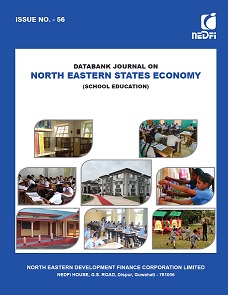
Educational Infrastructure in Assam


Education is the key input for the development of individual as well as the society. Education is accepted as one of the crucial inputs for nation building. The vision 2020, concerned with the sector of Elementary Education, is focussed on the accomplishing of the constitutional obligation of providing free and compulsory education for every child within the age group of 6-14 years and achieving the goal of universalisation of Elementary Education both in letter and spirit. The State Government equally put emphasis on to providing qualitative technical education to build technical skills to cater the needs of the economy.. Keeping in view the importance of education in the socio-economic development the State Government has been implementing various educational programmes.


Educational Progress:


Literacy rate of Assam is 63.25 percent, as per Census 2001, which is behind the national average of 64.8 percent. For achieving the objective Universal Elementary Education (UEE), Sarva Siksha Abhijan (SSA) is being pursued. To give more thrust on the issue, some other schemes under the State Plan, such as Cash awards to teachers for dedicated services, Incentive to institution for continuous good academic performance, Introduction of Mobile Education, Incentive to Girl children in the age group of 6-14 years to encourage the girl students, Financial grant to provide school uniform to BPL families, MIS known as District Information System on Education (DISE) has been operationalized, etc.


Elementary Education:


The Sarvsa Sikhsa Abhijan (SSA) is responsible to provide education upto the age of 14 years, a fundamental right of every child. The framework of Sarva Sikhsa Abhijan has been designed as a peoples’ movement for education for all, which will provide useful and relevant elementary education of satisfactory quality for all by 2020 AD bridging all social and gender gaps of the society.


School Facilitated Under Sarva Sikhsa Abhijan (SSA), 2009-10:


Category

Govt./ Provincialised

Recognised

Tea Garden

School

Teacher

Enrolment

PTR

School

Teacher

Enrolment

School

Teacher

Enrolment

Primary

30054

82929

2232283

26.9

-

-

-

449

1145

60895

Primary with Upper Primary

944

8807

171252

19.4

-

-

-

-

-

-

Upper Primary

4919

34605

771048

22.3

5175

33756

544003

-

-

-

Primary with High

09

120

3281

27.3


-

-

-

-

-

Upper Primary with High

1443

18160

435713

25.0

260

3096

43872

-

-

-

Source: Economic Survey Assam 2010-11


During 2009-10 the number of children in the School has increased as compared to the previous year. The total children in the age group of 6-14 years in school during 2009-10, as per District Information System for Education (DISE) of SSA was 6635131 numbers. Thus, percentage of children out of the school was 4.0 percent.


There has been an impressive growth of the elementary education system in Assam in the last few decades. This significant increase in the number of Primary schools and Upper Primary Schools, the number of teachers at Primary & Upper Primary and enrolments at both the levels of elementary education.


Statistics of Elementary Education in Govt. / Provincialised school:


Year

Primary

Upper Primary

No. of School

Student

Teacher

PTR

No. of School

Student

Teacher

PTR

1951-52

11172

626282

16554

28

1012

107649

3714

32

2001-02

30068

3906000

83573

47

6730

2716000

58791

46

2009-10

30054

2298928

82929

28

5863

1739082

34605

N.A

Source: Economic Survey Assam 2010-11


Pupil Teacher Ratio (PTR):


The Pupil-Teacher ratio at Primary and Upper Primary school in the State has been found satisfactory but statistics reveals that during 2009-10, as many as 7474 numbers of Primary school [i.e. around 25 percent of total Primary school] are identified as Single Teacher school and 11.2 percent schools under Elementary sector school, in the State are identified as Single Teacher school having students.


Pupil Teacher Ratio, Assam:


Year

Primary

Upper Primary

Rural

Urban

Rural

Urban

2008-2009

27.8

18.1

22.4

19.2

2009-2010

28.0

17.9

22.0

18.2

Source: Economic Survey Assam 2010-11


District wise number of Educational Institutions having various facilities in Assam upto 31st March, 2010:


Districts Primary School Middle School
Total School Schools having pacca Building Schools having Drinking Water facility Schools having cooking shade for meal Schools having toilet facility Total School Schools having pacca Building Schools having Drinking Water facility Schools having cooking shade for meal Schools having toilet facility
Dhubri 1275 728 1238 1446 982 224 153 323 - 157
Kokrajhar 1253 798 1153 1064 543 169 115 146 - 116
Bongaigaon & Chirang 966 594 906 962 745 184 98 177 - 161
Goalpara 941 712 930 957 647 214 136 213 - 205
Barpeta & Baksa Part 1839 811 1808 1820 1320 352 118 349 - 288
Nalbari & Baksa Part 1484 623 1383 1483 1357 273 126 255 - 246
Kamrup (R & M) 2172 1086 2064 2168 2065 437 209 405 - 364
Darrang & Udalguri 1519 942 1348 1495 1272 208 126 181 - 179
Sonitpur 1313 1170 1254 1325 809 203 203 195 - 164
Lakhimpur 1366 681 1294 1372 786 338 165 312 - 231
Dhemaji 847 325 822 840 323 168 63 166 - 95
Morigaon 816 527 790 812 685 180 105 169 - 144
Nagaon 2009 1158 1940 1998 1280 439 216 419 - 306
Golaghat 1002 783 979 1003 1885 235 172 225 - 190
Jorhat 1567 1414 1553 1562 1233 322 286 318 - 248
Sibsagar 1714 1421 1698 1707 698 322 270 317 - 195
Dibrugarh 1184 898 1168 1227 760 238 182 235 - 183
Tinsukia 839 722 824 860 780 154 137 150 - 139
Karbi Anglong 1402 677 798 1414 607 206 110 148 - 117
N.C. Hills 689 346 251 720 185 110 72 34 - 69
Karimganj 1245 682 844 1238 567 240 149 152 - 130
Hailakandi 1003 345 587 998 435 238 89 148 - 135
Cachar 1609 909 1120 1596 977 299 127 196 - 215

Assam

30054

18355

26752

30067

20941

5863 3427 5233 - 4377

Source: Economic Survey Assam 2010-11


Gross Enrolment Ratio (GER):


The Gross Enrolment Ratio of Primary School has been increased from 85 percent in 2003-04 to 100 percent in 2007-08 and is expected to increase to 110 percent in 2015 by covering underage and overage of 6-14 years of age. In case of Upper Primary School the Gross Enrolment Ratio has increased to 97 percent in 2007-08 from 60 percent in 2003-04 and it is expected to increase to 105 percent in 2015. The dropout in primary and upper primary is expected to be nil in 2015.


Gross Enrolment Ratio, Net Enrolment Ratio and Dropout Ratio in Primary and Upper Primary Level:

(Figure in Percentage)

Item

2003-2004

2008-2009

2009-2010

2015

GER Primary

85

103

109

110

GER Upper Primary

60

93

99

105

NER Primary

73

94

97

100

NER Upper Primary

42

88

82.0

100

Dropout Primary

10

8.77

5.74

0

Dropout Upper Primary

NA

15.54

14.74

0

Source: Economic Survey Assam 2010-11


Budget for Elementary Education:


The State Govt. is gradually increasing the allocation of budget in respect of Elementary Education so as to fulfil the aim and objective of universalisation of elementary education for the State. A good amount of money has also been spent by the State Government under elementary education. An amount of Rs.11543.00 lakh has been received in the Annual Plan 2010-11 for implementation of the development schemes under elementary education, Assam. An amount of Rs.6600.00 lakh is proposed for Annual Plan 2010-11 as State share 10 percent (90:10) to Sarva Siksha Abhijan.


Budget Provision and Expenditure of Elementary Education:


Year

Plan

Budget allocation

Amount received

Amount utilised

2001-2002

20867.50

22553.66

22553.66

2002-2003

22586.55

22417.74

22417.74

2003-2004

13071.80

12587.93

12587.93

2004-2005

11115.00

13484.95

13484.95

2005-2006

21595.00

21595.00

21595.00

2006-2007

4484.10

4044.09

4044.09

2007-2008

3850.00

4151.48

3850.00

2008-2009

9380.00

9315.00

9315.00

2009-2010

11590.00

11590

11590

Source: Economic Survey Assam 2010-11
 

Mid Day Meal Scheme:


The Government of India has launched a countrywide Programme of Nutritional support to Primary education commonly known as Mid-Day-Meal Scheme on 15thAugust, 1995 through the State Governments in order to give boost to universalization of Primary Education by increasing enrolment, attendance and retention in Primary Education and to improve the standard of education. In Assam this scheme has been started on January/2005.


Total requirement of cooking cost for the year 2009-10

Rs.14677.48 lakh

State share (10%)

Rs.146.75 lakh


The programme covered all Government and Provincialised Primary schools and Primary Section of MV School receiving financial assistance, EGS and AIE centres. During 2009-10, it has been proposed to cover all the aforementioned schools/centres as well as their enrolment from class I to V. The State Govt provides 10 percent of total fund as State share for cooking cost @ Rs.0.20 per student per teaching day for implementation of cooked Mid-Day-Scheme For this scheme, the Government of India provides cost free food grains (rice) and the cost of cooking. The Government of India also reimburses the transport charges under the scheme.


Adult Education:


Adult Education programme was started on National Basis in the year 1978-79. Subsequently after constitution of National Literacy Mission (NLM) in 1988, the total literacy campaign came into being. During the year 2009 the Sakshar Bharat Mission 2012 has been launched by the Govt. of India.


In Assam, the tasks of implementation of adult literacy programmes have been entrusted upon Zila Saksharata Samitees (ZSS) of different districts. The Programme is funded on sharing basis between the
State Government and Government of India. The State Government bears one third costs as State share. So far 22 Districts have been covered under Total Literacy Campaign (TLC) and out of the total 22 Districts, 7 Districts have been covered under Post Literacy Programme (PLP). During the Annual Plan 2009-10, it is proposed to provide educational facility to 4000 illiterate child labour.


Madrassa Education:


A separate Directorate of Madrassa Education has been created in 2005, earlier it was a part of Directorate of Secondary Education. At present there are as many as 524 pre-senior Madrassas, 164 Senior Madrassas, 5 Arabic Colleges, 14 Title Madrassas, and 500 Voluntary Moktab Madrassas continuing Madrassa education in the State.. There are more than 1.20 lakh students enrolled in 707 Madrassa Institution in the State as on 1.1.2010.During the 11th Five Year Plan (2007-2012) 325 Madrassas are proposed for provincialisation with 3888 posts under State Plan.


There is a budget provision of 3510.00 lakhs during 2009-10 under Language Development including Financial Assistance to Non-Govt. Madrassas (plan).


An outlay of Rs.7662.00 lakhs has been proposed for the annual plan (2010-2011) under the State Plan.


Technical Education:


Engineering Colleges:


There are two State Engineering Colleges, namely, Assam Engineering College, Guwahati and Jorhat Engineering College, Jorhat imparting Bachelor of Engineering Degree Courses in the disciple of Civil, Electrical, Chemical, Mechanical, Electronics & Telecommunication, Instrumentation Engineering, Industrial & Production Engineering and Computer Science & Engineering. Masters of Engineering Courses in Civil Engineering and Research works in the Degree & Ph.D is being carried out in civil, chemical, mechanical Engineering in Assam Engineering, Guwahati. Already 5 scholars were awarded Ph D degree by Gauhati University for the Research in the Department of Civil Engineering. Although the Bachelor of Engineering courses in Instrumentation Engineering, Industrial & Production Engineering and Computer Sc. & Engineering were introduced by the Govt in 1998, for which there was no adequate laboratory facility and that facility has been set up in both the Engineering College. For development and upliftment of the two Engineering Colleges, the following schemes are proposed for implementation during the 11th Five year Plan period.


  • Creating laboratory facilities for three new Bachelor Engineering Degree Courses.

  • Modernization of all the existing laboratories & Workshop.

  • Two separate buildings for the College library of two colleges as recommended by AICTE

  • Increase the intake capacity of Bachelor Engineering Degree Courses.

  • Introduction of Bachelor Engineering Degree Course in Information Technology at Assam Engineering College with 30 intake.

  • To establish the Training & Placement Cell at each College, since training is a part of the curriculum and placement of students after graduation is absolutely necessary. For this one office assistant for each cell is proposed to be provided. A vehicle is to be provided to each cell for mobility of the training and placement officer and to receive and to provide transport to the visibly recruiting personnel from the organization.

To achieve the above mentioned goals during the Annual Plan 2010-11 an amount of Rs.409.00 lakh is proposed.


Centrally Sponsored Schemes:

  • P G Course in Watershed Management and Flood control at Assam Engineering College with 100% Central Share;

  • P G Course in Soil Mechanics at Assam Engineering College, Guwahati with 100% Central Share;

  • Removal of Abst. & Modernisation of Laboratories in Computer in Engineering Colleges with 100% Central Share;

  • MCA at Assam Engineering College, Guwahati and Jorhat Engineering College, Jorhat with 100% Central Share;

  • Community Polytechnic Scheme with 100% Central Share;

  • 50% Central Share as grant in aid to Regional Engineering College, Silchar;

  • Post Diploma Course in Computer Application with 100% Central Share;

  • NEC Scholarship & Book-grant to the meritorious students with 90% central share

An outlay of Rs.263.00 lakh is proposed to provide during the Annual Plan 2010-11 under Centrally Sponsored Scheme.


Steps taken for Expansion and Development of Technical Education in the State:


For the expansion of Technical Education in the State, steps have been taken for establishing new Engineering College, polytechnics and technical University. The intake capacity of Jorhat Engineering College, at Jorhat and Assam Engineering College, at Guwahati, has increased from 590 to 753 during 2009-10. Engineering Course has already been started in Guwahati University, Dibrugarh University and Jorhat Institute of science and Technology from the academic year 2009-10 with intake capacity of 165, 240 and 120 respectively. Engineering courses is going to be started in B.B. Engineering college, Kokrajhar with intake capacity of 120 during 2010-11 Besides these Four (4) Engineering college under private sector has the intake capacity of 1060. Hence the intake .capacity of Engineering courses has been increased to 2458.


Following projects are proposed to be implemented during 2010:

  • Government has issued NOC to start two new Engineering Diploma course in Garment Technology & Fashion Design at Assam Textile Institute Guwahati.

  • To upgrade the Jorhat Science College to the Jorhat Institute of Science and Technology, an amount of Rs.150.00 lakh has been released, for the purpose.

  • An amount of Rs.50.00 lakh has been provided for establishment of 11 nos. of training cum placement cell in the existing. 9 polytechnics, Assam Engineering collage and Jorhat Engineering collage.

  • The Government has proposed to set up two new Engineering colleges at Dhemaji and Goalpara under Chief Minister’s special scheme.

  • Set up of Technical University at Nagaon under public private partnership under Chief Minister’s Special scheme.

  • Infrastructural development of Asaam Engineering College under Assam Bikash Yojana.

  • Establishment of University of Science and Technology.

Junior Technical Schools (JTS):


At present there are two Junior Technical Schools (JTS) running in the State of which one is at Sivasagar and the other one is at Goalpara.


Polytechnics:


At present there are nine (9) polytechnics in General area offering various Diploma courses:


The intake capacity of these institutions is 3810.

  • In view of the unemployment of diploma engineers in traditional branches such as civil, electrical etc it is proposed to reduce the intake in some courses like civil Engineering. etc and increase the intake in presently relevant courses such as computer Engg. electronics Engg. etc and introduce these courses in institutions where it does not exist.

  • It is proposed to introduce Diploma courses of IT / Computer Applications in all Polytechnics.

  • To enhance the facilities for Technical Degree Courses it is proposed to upgrade some branches of existing Polytechnic to Degree level.

  • An amount of Rs.189.00 lakh is proposed to achieve these goals in the Annual Plan 2010-2011.


Medical Education:


The Directorate of Medical Education, Assam is entrusted with the task of generating human resources like Doctors, Nurses, Technicians, Physiotherapist, Pharmacist and other Health personnel to meet the growing needs of not only of the state but the entire North Eastern Region.


In MBBS course in the three Medical Colleges of the State the numbers of seats have been augmented from 391 to 426. To augment the capacity further, 3 new Medical Colleges at Jorhat, Tezpur and Barpeta with 100 MBBS seats in each Medical Colleges are being set up, while Jorhat Medical College has been started functioning from the current year. Two more Medical Colleges viz, at Diphu and Nagaon are also going to be established. The PG seats in the Medical Colleges have been increased from 246 to 347. In addition to this, 16 seats in super speciality subjects have been created in the Gauhati Medical College.


Srimanta Sankardeva University of Health Sciences has been established to monitor and to suitably strengthen the Medical Education in the State.


The Government has been extremely concerned about the poor availability of doctors in the rural areas and to remedy the situation an Institute has been set up at Jorhat to impart training and grant Diploma in Medical and Rural Health Care. The Institute has been started functioning and the 1st batch of 92 Diploma holders which passed out in 2009, have been appointed in the rural health institutions.


Three Institutes of Paramedical Sciences at Guwahati Medical College at Guwahati, Assam Medical College at Dibrugarh and Silchar Medical College at Silchar with 12 different courses having intake capacity of 400 has been started from 2008-09.


The intake capacity for GNM course has increased to 912 in 15 nos. of GNM schools. With establishment of 8 new GNM Schools, out of which 5 have been already been completed with creation of manpower, the intake capacity of GNM trainees will stand at 1287.


Besides there are one Regional Dental College, three Homeopathy College, one Nursing College, and one Ayurved College in the State under medical education.


Higher Education:


Status of Institutions under Higher Education in 2009-2010:

  1. Gauwahati University (1948)

  2. Dibrugarh University (1965)

  3. Assam Agriculture University (1965)

  4. Central University, Tezpur (1994)

  5. Assam University (1994)

  6. KK Handique State Open University (2007)

  7. Donbosco University (2007)

  8. Downtown University (2007)

  9. Bodoland University (2008)

  10. Women University (2009)

  11. Kumar Bhaskar Barman University, Nalbari (Proposed 2010)

  12. Assam Science and Technical University (Proposed 2010)

  13. Institution of national importance- (a) Indian Institute of Technology (b) National Institute of Technology

New projects / Initiatives of Infrastructure development etc.:


Kokrajhar college was taken over as Govt. college (2007)

  • Rs.93.371 lakh released to KK Handique Govt. Sanskrit college under NLCPR project in 2007-2008.

  • Rs.55.33 lakh released to Kharupetia College under NLCPR project in 2008-2009

  • Rs.1500 lakh sanctioned to G.U., D.U. & 102 rural colleges in Assam under ACA scheme in 2009-10

  • Cotton College is proposed to be upgraded as International College (2010-2011)

  • Rs.300 lakh provided for administrative, academic, science building etc. for Bodoland University in 2010-2011.

  • Rs.400 lakh provided for infrastructure development of Gauhati University & Dibrugarh University under ACA Schemes.

  • Rs.1000 lakh provided for infrastructure development of rural colleges in Assam under ACA schemes.

New academic related:

  • 5- year LLB degree course introduced in B.R.M. Govt. Law College (2008-2009)

  • 4- year BE / B.Tech, M.Tech. in campus courses introduced in Gauhati University (2009)

Teacher related:

  • Service of teaching and non teaching staff of 189 provincialised colleges made pension able.

  • Teacher Training & Placement cell set up in 7 Govt. and 189 Provincialised colleges (2009)

  • Grant-in- Aid @ Rs.5 lakh to 100 Sanskrit lols announced.

  • Payment @ Rs.8000/- w.e.f. 2010-2011 to teachers in 142 non Govt. College / streams announced.

Source: Economic Survey Assam 2010-11


TOP▲